Your First RC Rock Crawler: The Better Questions to Ask
The best beginning trail rig is the one you can drive, repair and enjoy on terrain near home.
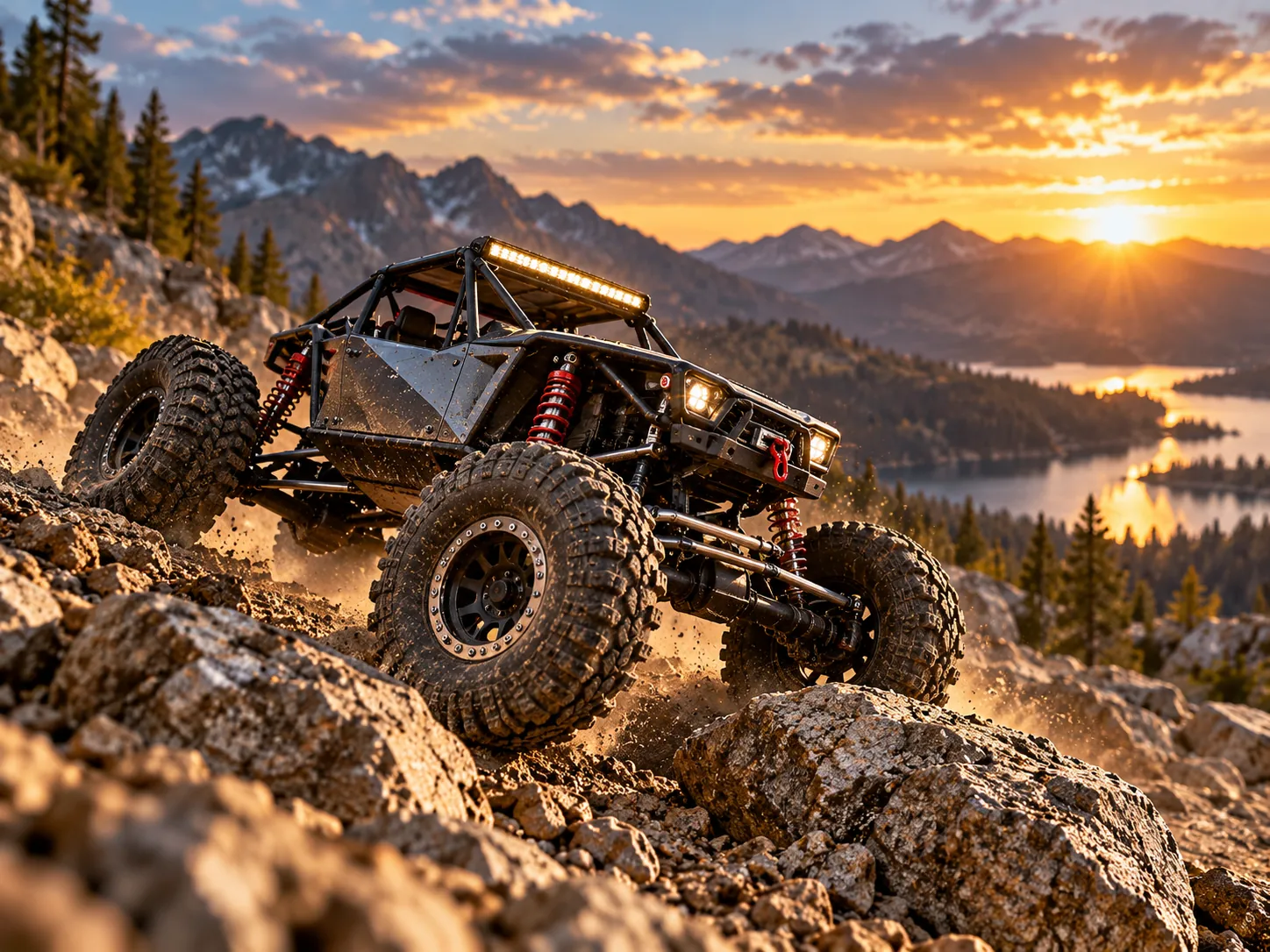 ILLUSTRATIVE EDITORIAL ARTWORK / NOT HANDS-ON TEST FOOTAGE
Crawling is the opposite of speed chasing. Half the fun comes from reading a line over the rocks, choosing exactly where to place the front tires and trying again when gravity wins.
Small-scale crawlers such as the Axial SCX24, Traxxas TRX-4M and FMS FCX24 families are worth looking at, but they have different dimensions, parts ecosystems and variant options. Compare the exact listing, not just the name.
Pick your terrain first
Kitchen obstacle courses and table-top rock gardens favor a different experience from park trails and large backyard courses. The smallest trucks are easy to transport and can make ordinary rocks feel enormous. Larger rigs are easier to see outdoors and may handle more varied terrain.
Think about storage and transport. The rig you can carry to a good trail is often the one you will actually use.
Look beyond the body shell
Check wheelbase, tire size, suspension travel, drivetrain, steering angle and battery access. A convincing scale body can hide awkward access to the battery or electronics.
Ready-to-run is not a universal standard for included accessories. Read the seller’s exact package list and verify whether the battery and charger are present.
Five early driving habits
Drive slowly with smooth throttle, watch the front tires, approach obstacles at angles, keep steering inputs deliberate and avoid prolonged stalled motors. On steep descents, sudden input often causes more trouble than careful planning.
Don’t obsess over upgrades after the first outing. Spend a few batteries learning what the truck does well—and where it consistently struggles.
The purchase logic
Buy a commonly supported platform in a size that fits your terrain and budget. For used rigs, inspect the steering servo, axles, transmission, battery compartment and signs of water exposure. Used upgrades have value only if they are correctly fitted and documented.
Common questions before you commit
Is 1:24 too small for outdoor trails? — Not necessarily. The right obstacle and surface make a tiny crawler a serious challenge, but bigger rigs can handle rougher trails and grass more easily.
Should a beginner buy a used crawler? — Sometimes, if the chassis, electronics, steering and battery condition can be verified. A customized used rig without parts information is a less friendly starting point.
What is the first upgrade? — Often tires or carefully chosen inserts, after you have learned the stock setup. Fit and traction matter more than simply adding visible metal accessories.
How we put this guide together
RCVehicles.co is a research-led editorial site. We compare published product information, general hobby principles and marketplace listings. We have not physically tested or purchased the products linked in this article. Generated images are illustrative and should never be mistaken for product photography.
Compare before you commit.
Listings, variants and stock change. Read the seller’s specifications and check parts availability.
As an eBay Partner, we may earn a commission when you purchase through our links. Images are illustrative; check actual listings for details.
Browse relevant listings on eBayKEEP EXPLORING
 WORKSHOP
The First RC Crawler Upgrade Should Probably Be Tires
Before shopping for shiny metal parts, understand traction, weight and the price of extra grip.
READ THE GUIDE ↗MARKETPLACE FIELD NOTESBuying Used RC Vehicles on eBay: The 12-Point Inspection
How to spot a bargain, what to ask a seller, and when a “fully upgraded” model is a liability.
READ THE GUIDE ↗