How to Build a Miniature Construction Site That Actually Works
The joy of tiny earthmoving is designing a job, not just parking a collection of yellow machines.
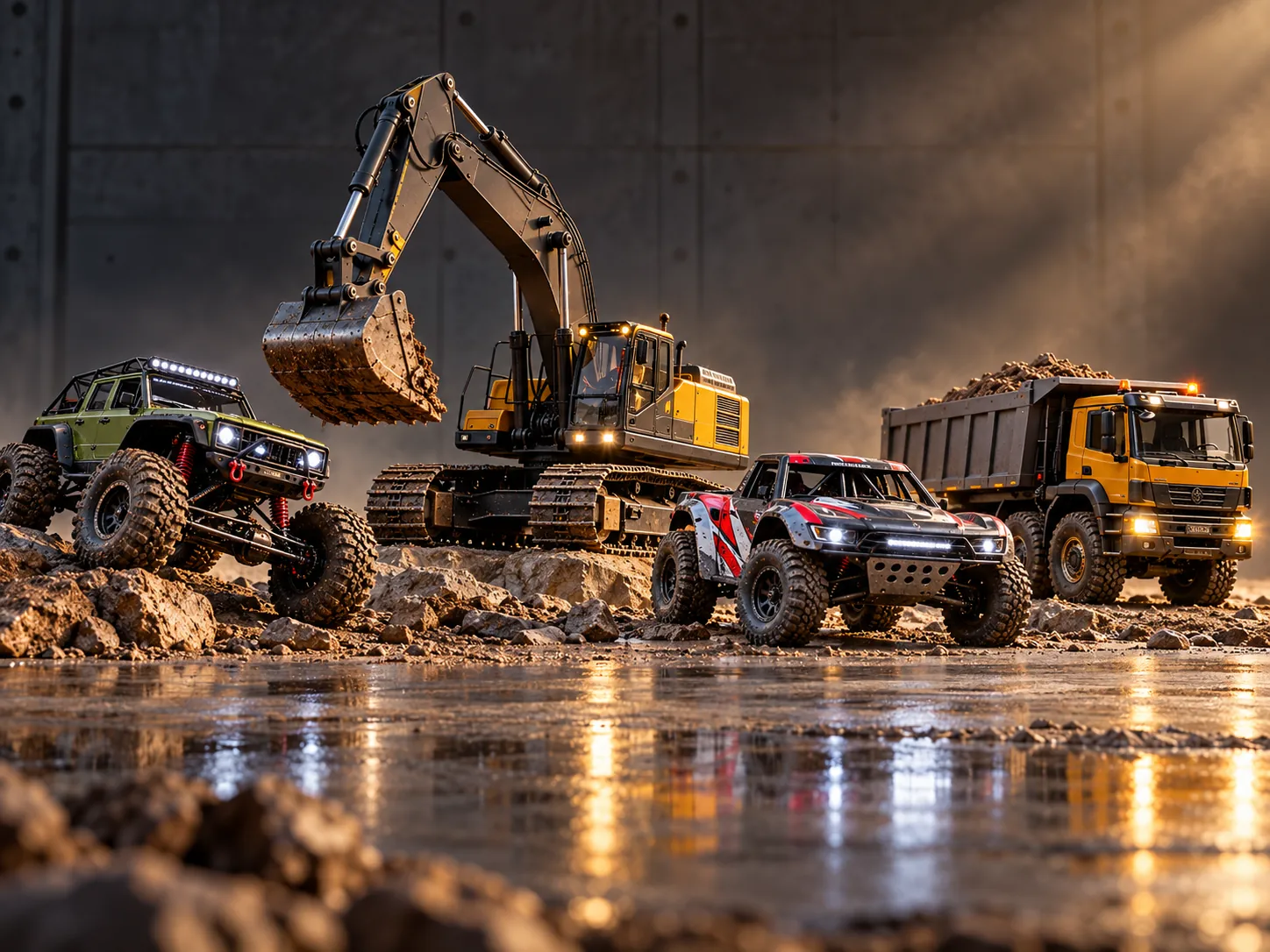 ILLUSTRATIVE EDITORIAL ARTWORK / NOT HANDS-ON TEST FOOTAGE
A miniature jobsite can fit inside a large raised bed or take over a dedicated corner of a backyard. The trick is thinking like a site manager: access, digging area, material, roads, loading and disposal.
It does not need to be elaborate. A small controlled layout will teach you more about what your vehicles can do than a huge pile of mystery dirt.
Sketch four zones
Plan a stockpile, a dig zone, a loading position and a dump area. Leave enough turning radius for the longest truck. Keep a firm perimeter so wheels and tracks stay out of fragile landscaping.
A fixed camera-friendly viewing point is worth planning too. Good lighting and a background without household clutter make the action look surprisingly realistic.
Choose loose, predictable material
Start with clean, loose material that suits the smallest machine in your fleet. Avoid sharp debris, contaminated soil, wet cement or material likely to damage small gears and hydraulic connections.
A shallow, lined tray makes cleanup easier. Dust control, eye protection and safe lifting still matter even at small scale.
Give every vehicle a task
A crawler can inspect the route. A loader can build the pile. The excavator loads. The dumper transports. A dozer levels the unloading area. Suddenly the operator has decisions to make.
If you own only one machine, use a simple timed challenge: fill a measured container, move it, restore the surface, then repeat with a different bucket approach.
Capture the magic responsibly
Keep batteries away from water and loose conductive debris. Photograph from vehicle height, using natural side lighting. Be transparent when photos are illustrative rather than records of an actual test. Our site images are visual concepts, not test evidence.
Common questions before you commit
How much space do I need? — A small raised tray or table can work for compact electric machines, while larger fleets need turning room for trucks and access around the stockpile. Measure vehicle dimensions before building.
What material looks realistic on camera? — Loose fine gravel, clean sand or screened soil can look convincing at scale, but choose material your model safely handles. Avoid sharp rocks and airborne dust.
Is a second vehicle necessary? — No. A single excavator and a measured pile already create a useful challenge. A compatible hauler adds workflow and storytelling when you know the hobby is for you.
How we put this guide together
RCVehicles.co is a research-led editorial site. We compare published product information, general hobby principles and marketplace listings. We have not physically tested or purchased the products linked in this article. Generated images are illustrative and should never be mistaken for product photography.
Compare before you commit.
Listings, variants and stock change. Read the seller’s specifications and check parts availability.
As an eBay Partner, we may earn a commission when you purchase through our links. Images are illustrative; check actual listings for details.
Browse relevant listings on eBayKEEP EXPLORING
 THE JOBSITE EDITION
The RC Construction Machines Worth Comparing in 2026
From electric diggers to full miniature earthmoving fleets: what actually matters before you buy.
READ THE GUIDE ↗ TECH DEEP DIVE
Electric vs. Hydraulic RC Excavators: Where the Money Goes
The cost difference can be dramatic. The distinction is in motion, maintenance, complexity and how you actually use the machine.
READ THE GUIDE ↗