The RC Speedboat Starter Guide: The Retrieval Plan Comes First
A powerful boat looks incredible, but water adds an entire layer of practical decisions.
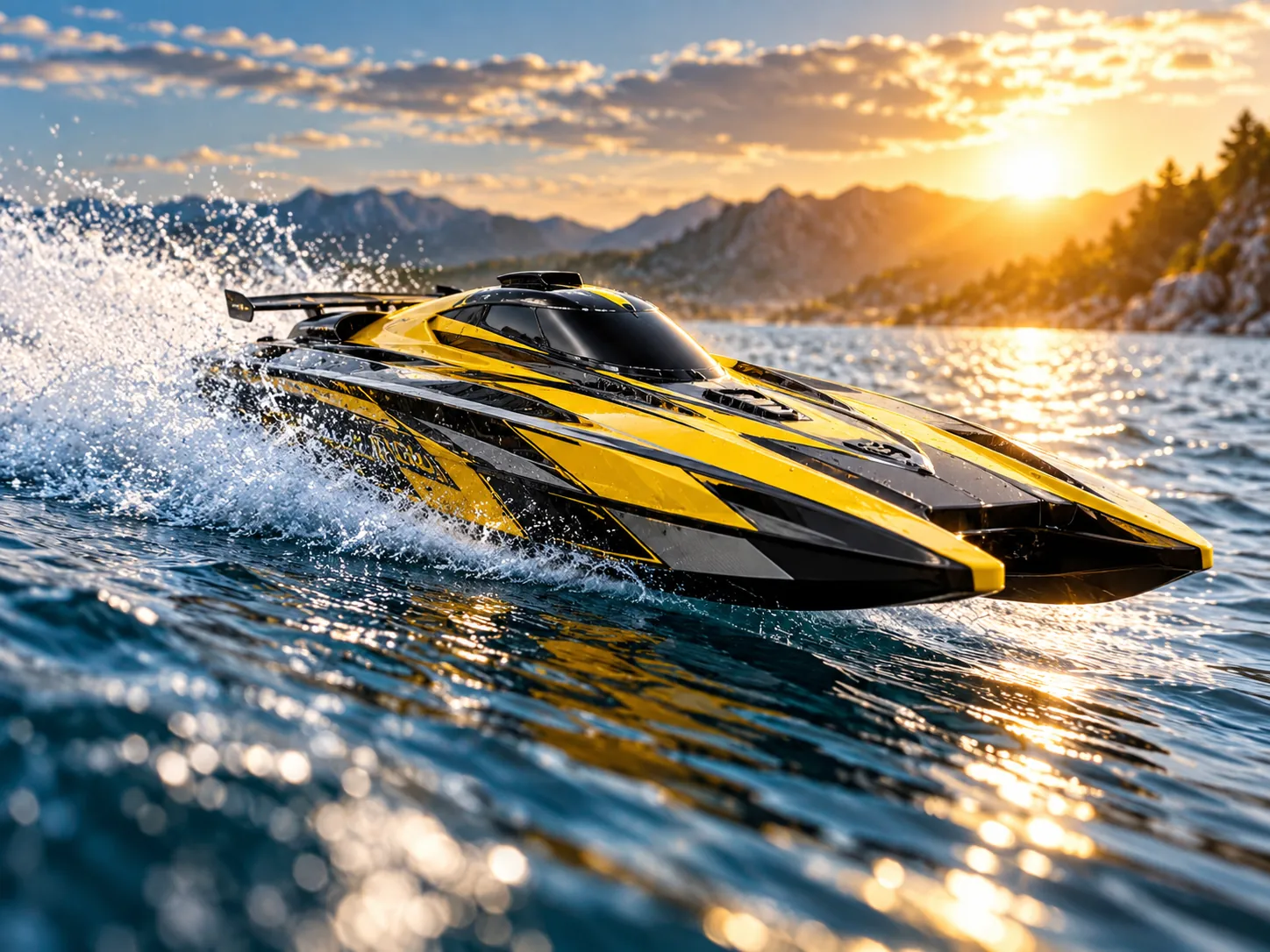 ILLUSTRATIVE EDITORIAL ARTWORK / NOT HANDS-ON TEST FOOTAGE
A fast RC boat skimming across a lake makes spectacular images. The less glamorous part is what happens when something goes wrong 60 meters from shore.
Before reading motor specifications, choose a safe place to launch, understand access restrictions and decide how you would recover a stranded model without entering the water.
Match boat to location
A small boat can feel lively on sheltered ponds but may struggle in chop. Larger boats need room, safe launch access and often more battery management. Avoid areas with swimmers, wildlife concentrations, navigation traffic or prohibited RC activity.
Read the manufacturer’s water-condition recommendations. Do not treat a marketing photo of a large lake as permission to run anywhere.
Check the practical hardware
Verify whether the model is self-righting, has low-voltage warning, uses water cooling and has a battery connector you can support. Those features are model-specific and must be confirmed before buying.
Check the hatch seals, cooling tubes, propeller fastening and steering mechanism every outing. Dry and inspect the hull after use.
The first run
Start with conservative throttle, stay close to shore and make short passes. Verify that steering inputs and radio reception behave as expected, then check for water inside the hull.
Never swim after a stalled boat or use a makeshift electrical recovery system near the water. Plan a safe, lawful recovery method before launch.
Buying used
Ask for images of the inside of the hull, battery compartment, prop shaft and wiring. Corrosion or improvised sealant can signal harder-to-diagnose problems than a scuffed exterior.
Common questions before you commit
What if the boat stops offshore? — Do not swim out after it. Have a safe, permitted method for recovery before launching, and keep early trips close to accessible shore.
Are all RC boats self-righting? — No. Treat self-righting as a model-specific feature, not something implied by a streamlined hull. Verify documentation for the exact variant.
Can I run a freshwater model in saltwater? — Only where the manufacturer permits it, with the cleaning and corrosion precautions it specifies. Saltwater can be particularly harsh on exposed components.
How we put this guide together
RCVehicles.co is a research-led editorial site. We compare published product information, general hobby principles and marketplace listings. We have not physically tested or purchased the products linked in this article. Generated images are illustrative and should never be mistaken for product photography.
Compare before you commit.
Listings, variants and stock change. Read the seller’s specifications and check parts availability.
As an eBay Partner, we may earn a commission when you purchase through our links. Images are illustrative; check actual listings for details.
Browse relevant listings on eBayKEEP EXPLORING
 THE JOBSITE EDITION
The RC Construction Machines Worth Comparing in 2026
From electric diggers to full miniature earthmoving fleets: what actually matters before you buy.
READ THE GUIDE ↗ TECH DEEP DIVE
Electric vs. Hydraulic RC Excavators: Where the Money Goes
The cost difference can be dramatic. The distinction is in motion, maintenance, complexity and how you actually use the machine.
READ THE GUIDE ↗